What Happens When a Ranger Finally Lets His Guard Down
The Confianza of the Circle
The ferry cafeteria was a landscape of bolted down tables and the flat, white light of fluorescent tubes. Every seat was claimed by locals, a sea of families and travelers who moved with a shared language I didn’t speak. I sat at a lone table, a small pocket of isolation in a room that didn’t belong to me. My head was on a swivel, my eyes scanning the moving crowd to spot anyone who might be following me or simply to find a friendly, familiar face. My 4Runner was parked in a separate area of the ship, out of sight. Atlas was not with me; I’d left him in the cabin I had rented for the crossing, a rare luxury to keep him away from the noise and the heat of the decks.
She was the first to sit. She was an elderly woman who moved with a quiet, calculated speed. She had arrived well ahead of her group A move I would later realize was "crafty." I didn't know then that she had hurried ahead specifically to claim a corner of peace, or that despite her age and her injuries, she would later be bullied into taking a top bunk for the duration of the voyage. She just asked to sit, and I nodded.
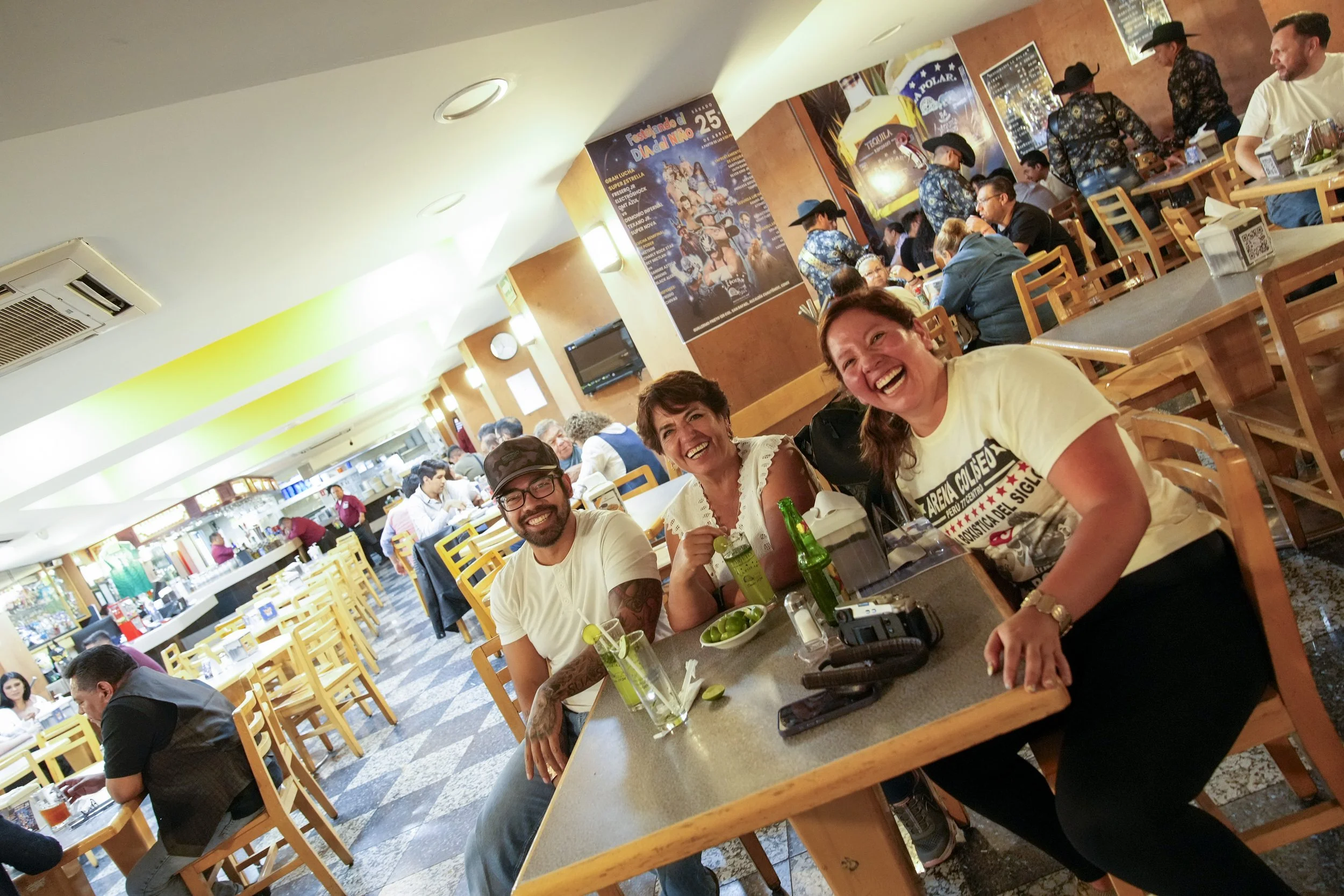
Then came the others. They arrived in a steady tide until I was surrounded by thirty women. Most of them looked at me with a suspicion that felt like a physical weight; I was a man alone, a foreigner sitting in the center of their circle. Hass joined the table later. She was a psychiatrist, and she led with an apology for her group taking over my space. She seemed relieved to have someone her own age to talk to and bought me a beer. Then her mother, Lucy, the woman who would eventually become the steady hand of my recovery, offered to buy a round of drinks for the table. As a performer played on the deck, the women began to sing along, the tension finally beginning to thin.
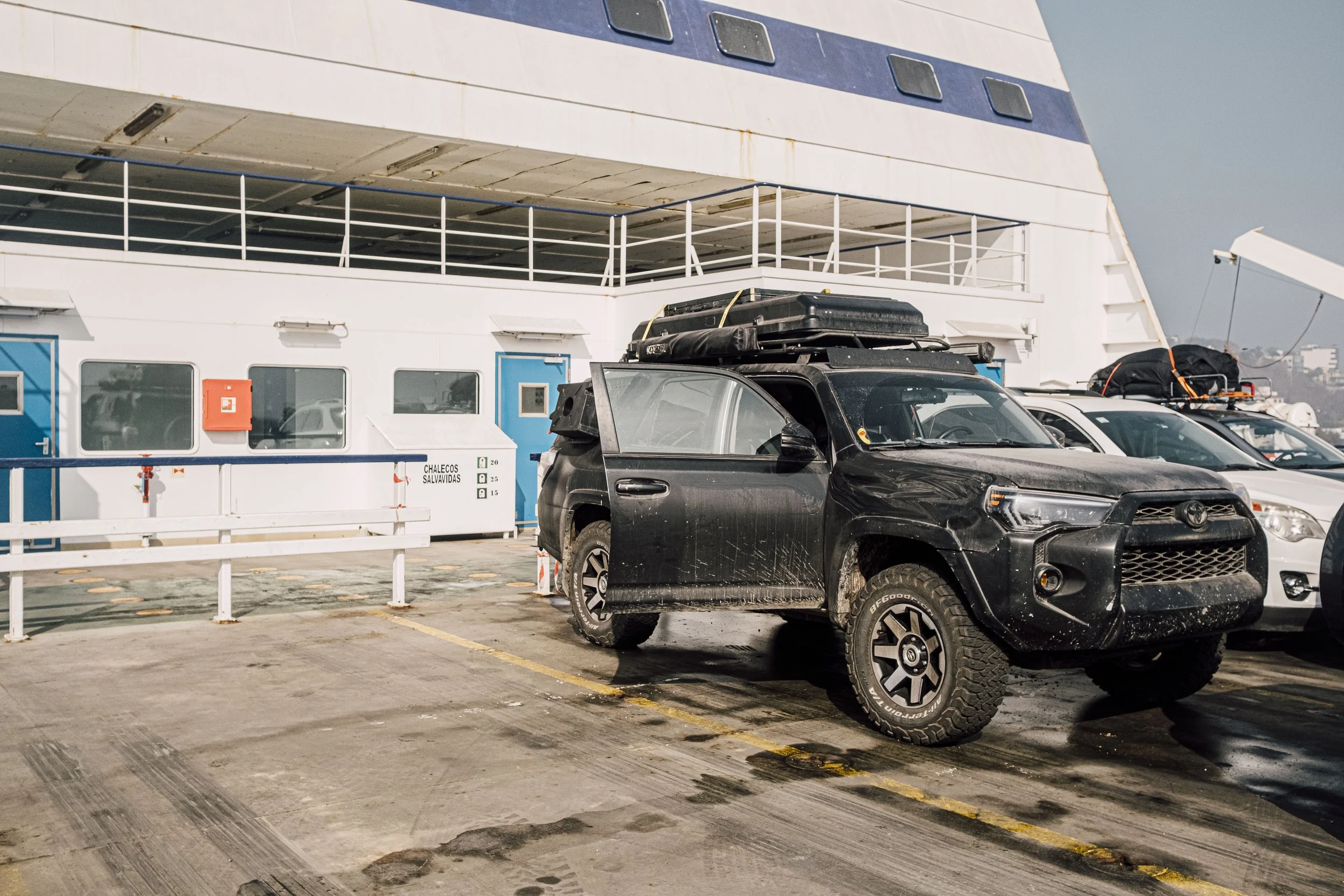
I asked Hass if she wanted to meet my dog. We left the noise of the cafeteria and walked down the narrow, vibrating hallways to my cabin. When I opened the door, Atlas was exactly where I’d left him. Hass fell in love with him immediately. She watched how he moved, how he stayed obedient and silent in the cramped space, and how he waited for a command before acknowledging a stranger. Seeing Atlas seemed to bridge a gap that words couldn't; it established a "vibe" of discipline and trust that Hass recognized. When we finally arrived in Mazatlán, the humidity of the coast hit as we moved to the vehicle decks. This image captures the open-air expanse of the ship's rear, where the 4Runner had been secured among the other trucks and cargo for the crossing.
Finally made it to Mainland Mexico
It was a week later in Mexico City when I met up with them again. By then, they had spent enough time with me to get a sense of who I was. Hass reached into her bag and handed me a set of keys to her family’s house. “Stay with us,” she said. Three days after moving in, the journey came to a dead stop. Gout hit my left foot with a finality that leveled me. It wasn’t just pain; it was a total inflammatory collapse. The joint became an angry, red mess, swelling until it was considerably larger than my right foot. I couldn't put the slightest pressure on it. Even when the family tried to support my weight so I could move, the joint simply would not hold. I was trapped in a guest room, a man whose life was built on movement, now unable to walk ten feet to the door.
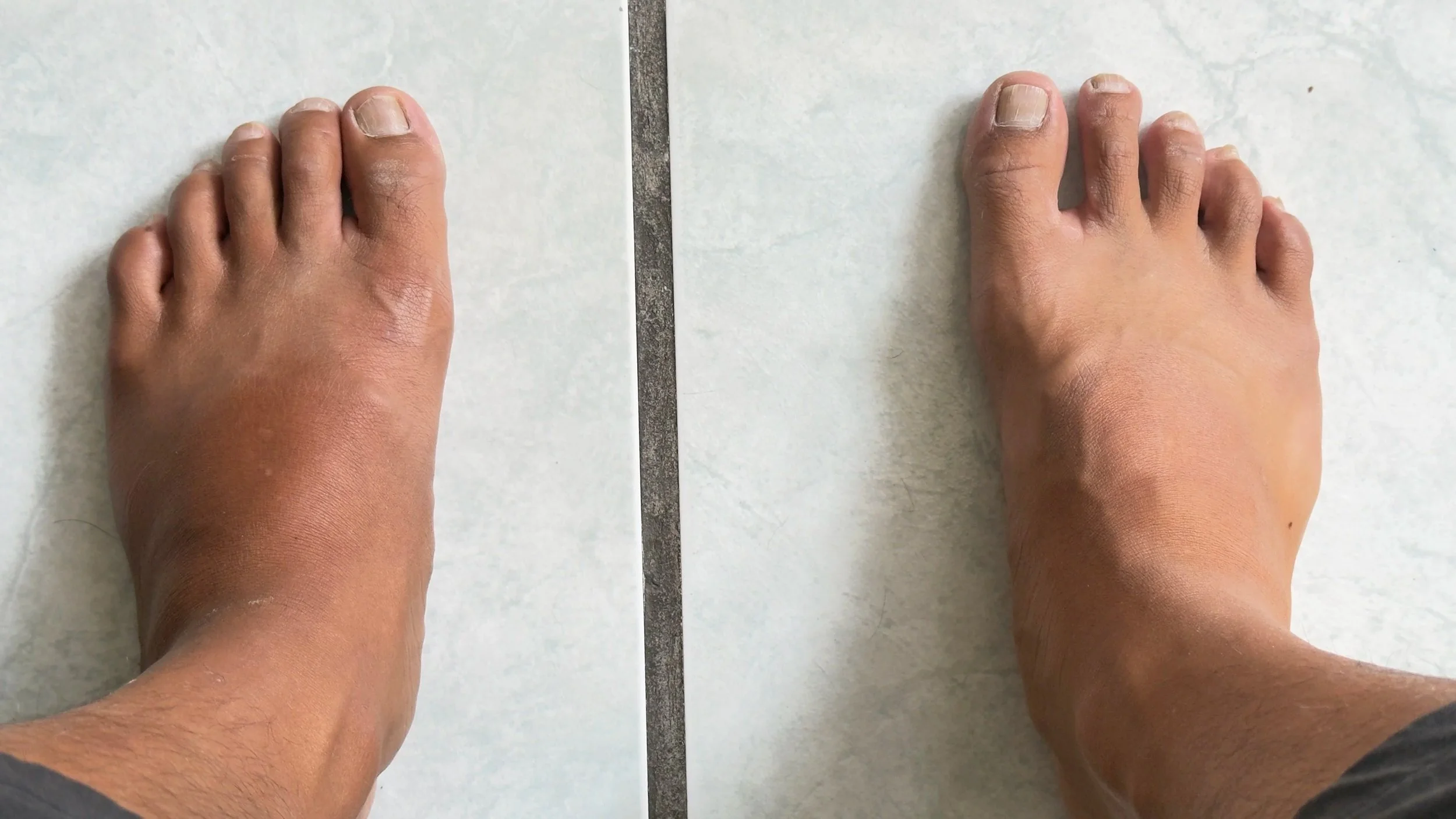
Hass drove me through the chaos of CDMX to get blood work done at Laboratorios Clínicos Oliver on April 8, 2026. I sat gritting my teeth against every vibration of the road. The results confirmed the fire in my joints: my uric acid was at 6.90 mg/dL, and my triglycerides were significantly elevated at 284 mg/dL. The family provided the drugs necessary to lower these levels and manage the fat in my blood, treating my recovery as a collective responsibility.
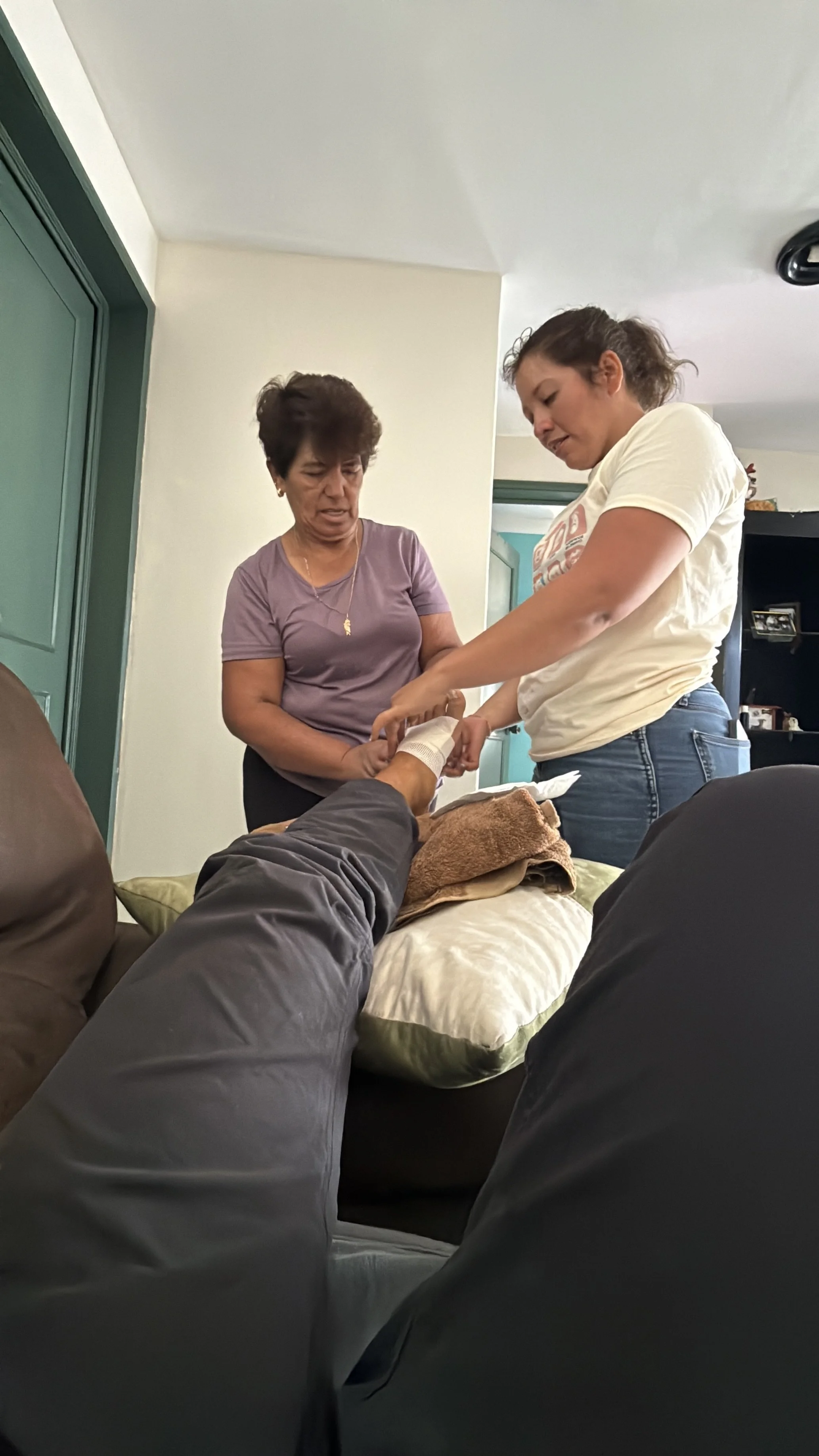
My most vulnerable moment on this entire trip didn't happen on a remote trail; it happened in that house. I was standing, leaning against whatever support I could find, as Lucy, a certified nurse, prepared a syringe of Tramadol. I had to pull my pants down, exposing myself as she penetrated my butt cheek with the needle to break the fire in my joints. There is no armor in that kind of vulnerability.
While the medicine blunted the pain, the family took over the parts of my life I could no longer manage. They walked Atlas every day through the neighborhood. The father had even volunteered to help with my adventure. He orchestrated the construction of a table for the 4Runner at the shop, PAMI Pallería y Mantenimiento de Inoxidable RCU S.A. de C.V.
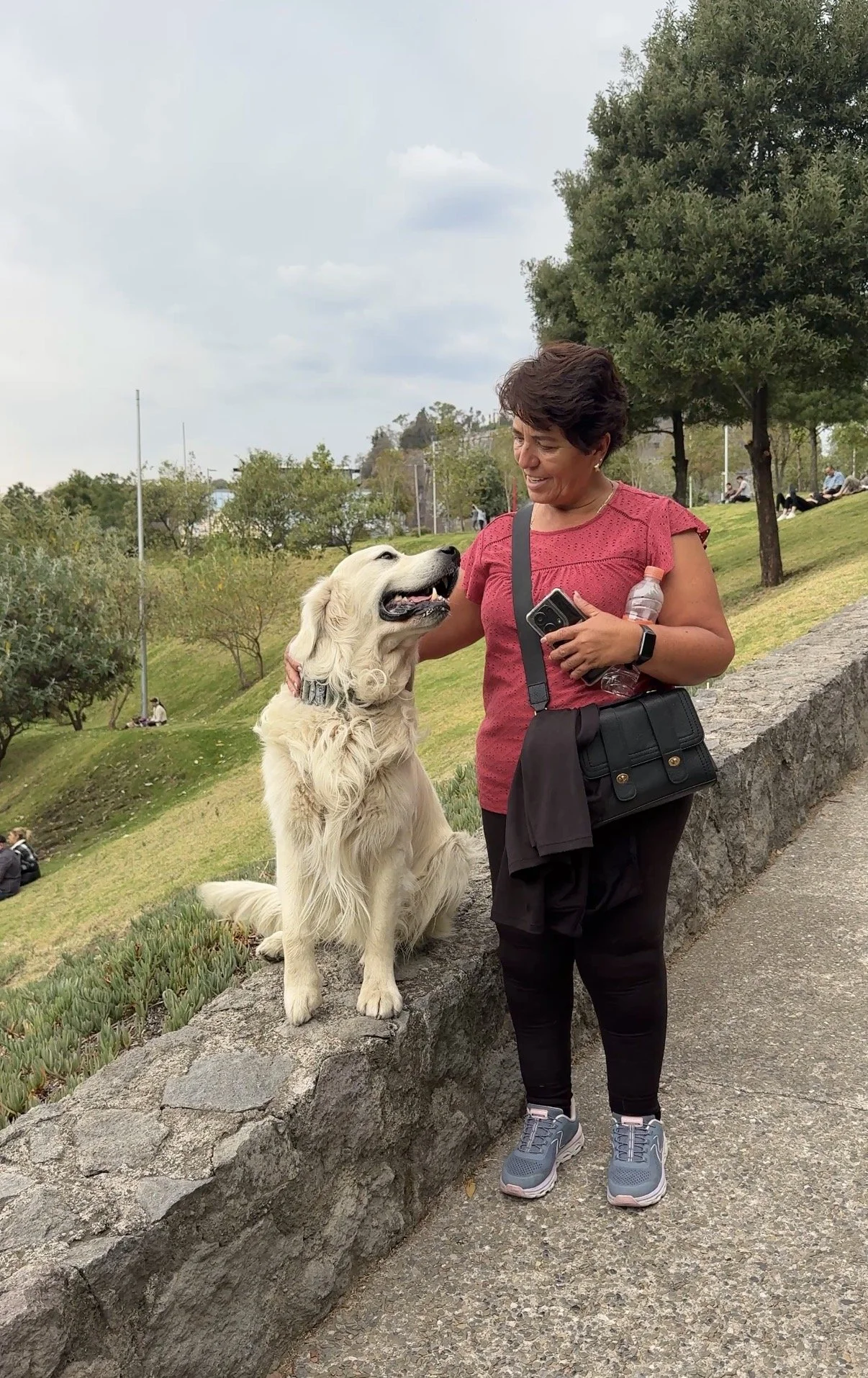
After a few days of rest, I hobbled into the shop. Although it still hurt to move, I couldn't just sit back; I wanted them to see that I appreciated what they were doing. I didn't have much money to offer, but I used the skill sets I had picked up from film school in Hollywood, California. I spent the afternoon filming a video of the table being made, documenting the work as a form of currency and thanks. The shop is a cavern of steel and industry. I watched a team of four men work in a communal dance. Two men did the heavy work of cutting large pieces of steel. Another handled the polishing, taking a metal brush to the surface until the raw edges were smooth. The others measured, cut, and welded. They produced a steel table that folded down from the side of the 4Runner, supported by cable ties. A piece of industrial engineering built by hands that owed me nothing.
Security was a constant thought. Hass eventually told me the reality of the blocks surrounding us: a serial killer had been found a couple of blocks away recently, and a drug dealer had been busted just a few houses down. My truck sat out on the street, filled with expensive gear. “Don’t worry about the car,” Hass told me. “We have cameras, but mostly, it’s because Lucy is well known in the neighborhood. Her reputation is your security.”
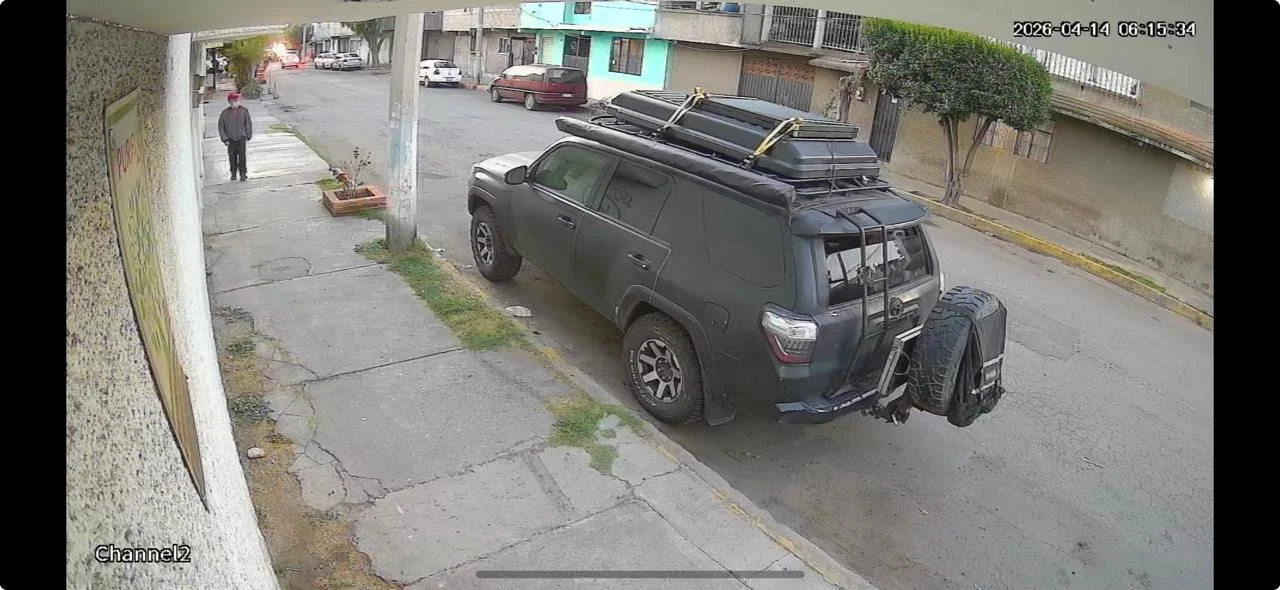
On the ferry, only three of those thirty women had spoken to me. The other twenty-seven looked at me with doubt. Yet two of those gave me a home, a steel workspace, and a nurse to carry me through the hard times. Atlas, who detects things most people can’t, never barked at them. He knew he was among family. Independence is a quiet way to live, but it is a fragile one. I had spent years trying to need no one, only to find that being cared for by strangers requires a different kind of bravery. I looked at the steel table, held together by cable ties and the labor of strangers, and I realized the road was no longer something I had to navigate alone.
Even in our most vulnerable moments, strangers can become family. If we're brave enough to let them.