

The Explorer at the Pump: Hugo Lupine
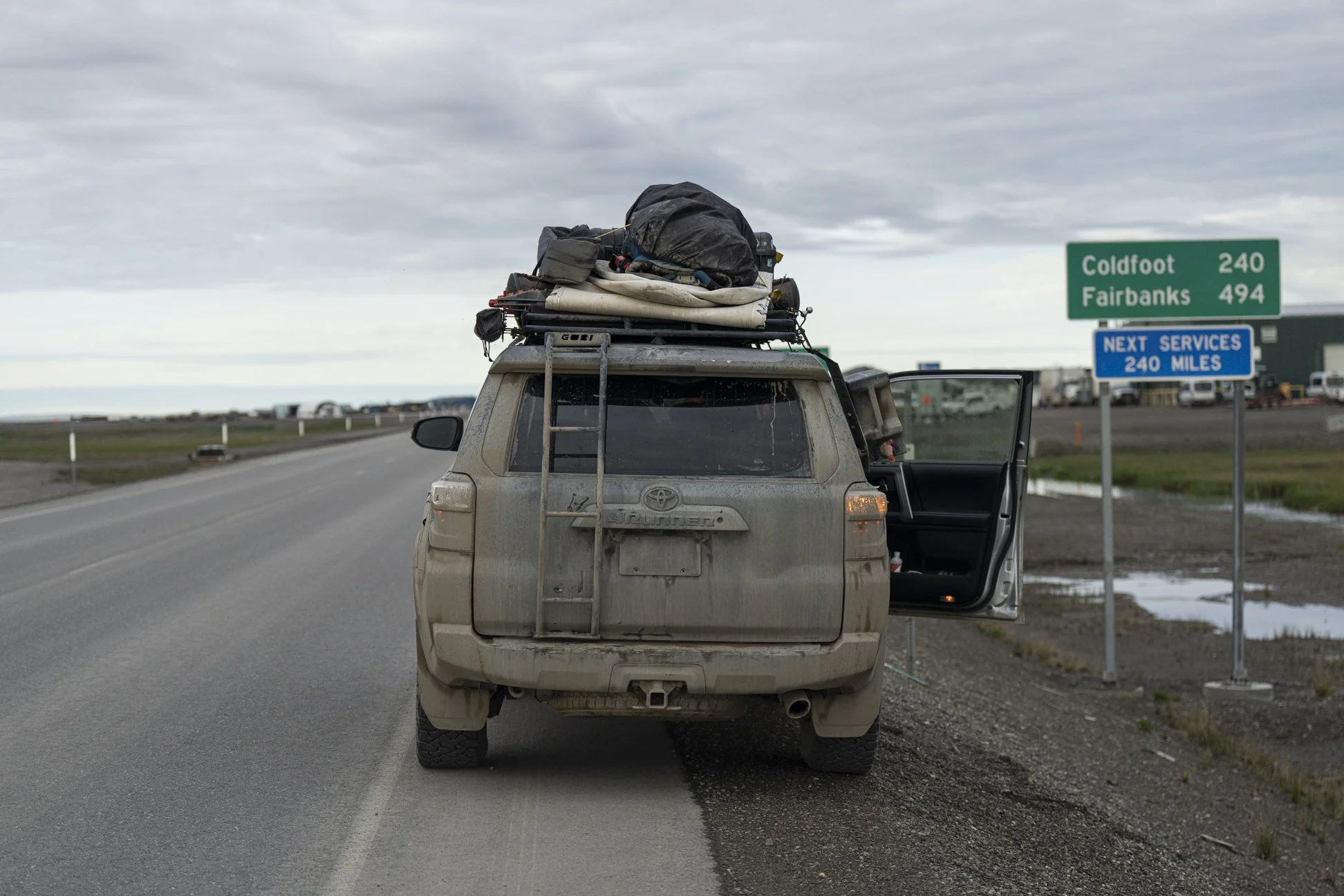
The Dalton Highway does not care about your credentials. At mile 175, in Coldfoot, Alaska a settlement of fewer than fifteen permanent residents, a truck stop, and a gas pump charging $7.49 a gallon, reputation means nothing. What matters is whether you can read weather, carry weight, and make decisions when the road ahead offers no guarantee of anything.
It was July, and the mosquitoes had arrived in their Arctic by the millions. They move in clouds so dense they can darken the air around your face, a phenomenon locals describe with weary pride. Travelers learn quickly: you don't swat them one at a time. You endure them, or you leave. Hugo Lépine was enduring them.
I first noticed him the way you notice anyone at a remote pump. The economy of his movement, the absence of theatrics. He wore the standard uniform of someone who had been traveling hard: worn boots, a pack that sat too high on his shoulders from long use, a Garmin dangling from his pack. His cheeks were burned from days of exposure. He looked like a man who had made several decisions he hadn't fully thought through, and was at peace with all of them.
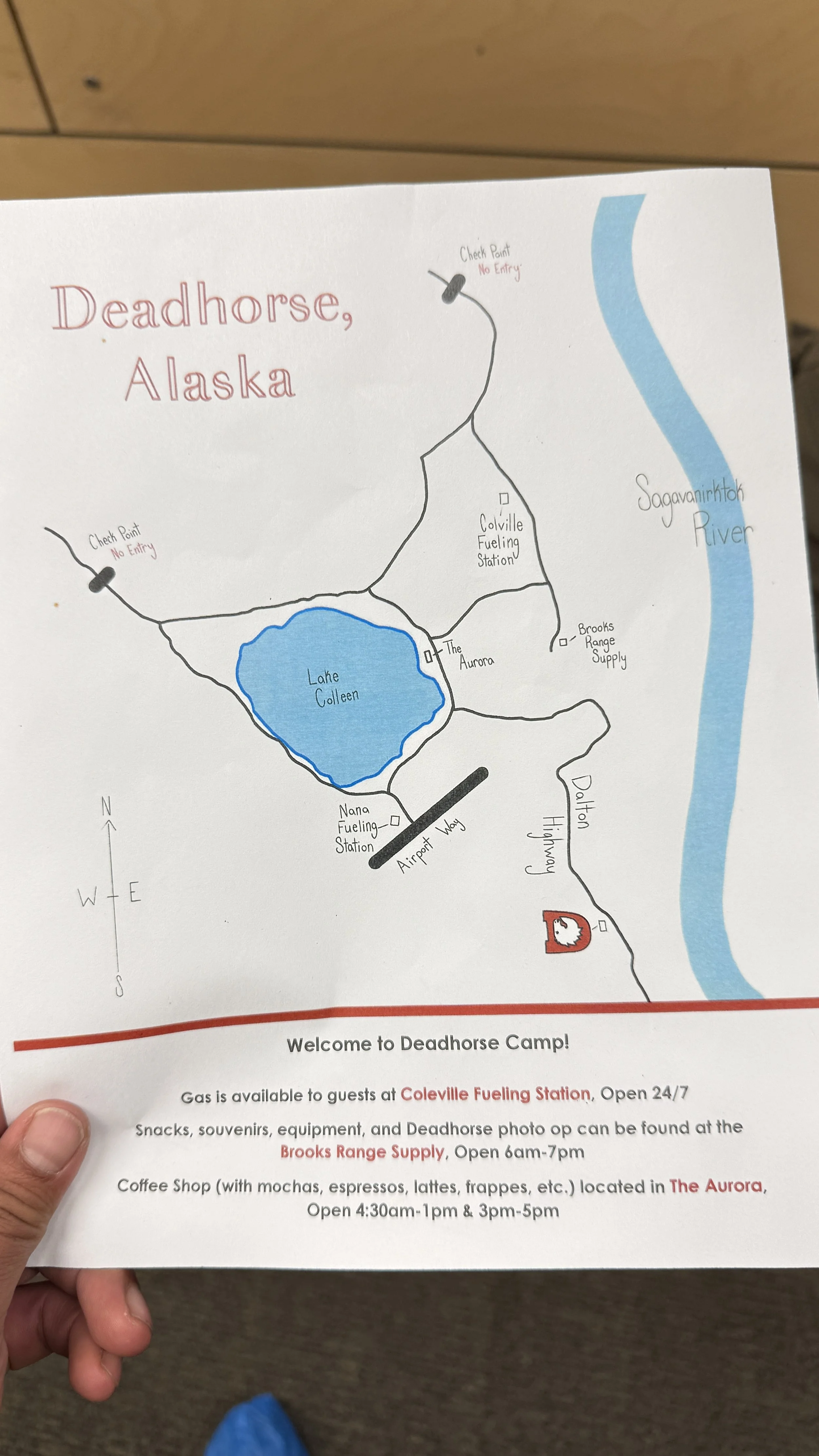
He had been following the Yukon River before a bear encounter near camp forced the kind of binary choice the wilderness occasionally presents: retreat south, or push further north. He chose north. Now he was at the last resupply point before 240 miles of unpaved gravel road with no gas station, no cell service, and no margin for mechanical error. He needed a ride to Deadhorse, the oil town at the edge of the continent, the literal end of the road.
He introduced himself as a traveler. Not as a chef. Not as anything that would require explanation.
I said yes, and we drove north.
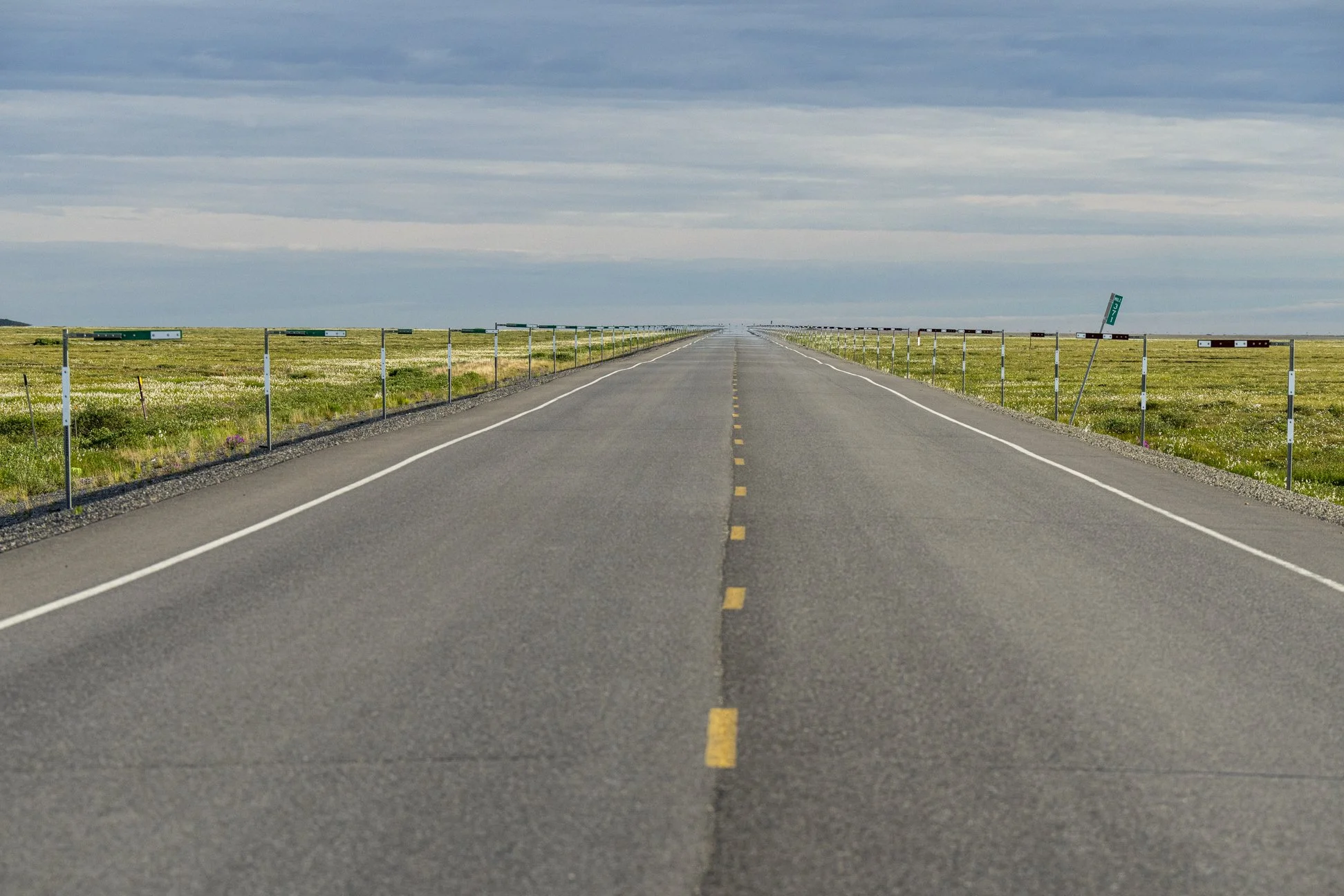
The Atigun Pass came first. The only highway crossing of the Brooks Range, where the road climbs to nearly 5,000 feet and the mountain walls press in close enough to feel personal. Then the tundra opened up: flat, enormous, and silent in the way that makes you realize how much ambient sound normally fills your life. We drove through it for hours. Near the pipeline crossing at Galbraith Lake, we hit a wall of stopped traffic. A semi-truck had gone into the barrier ahead, and the road, which in this stretch is barely two lanes of gravel, was fully blocked.
There was no detour. There was no alternative route. There was only waiting.
We camped in the parking area alongside other stranded drivers: truckers hauling equipment to Prudhoe Bay, a German motorcyclist, a few tourists in rental trucks who had underestimated the road. Hugo took the tent outside. I stayed in the vehicle. It took eight hours to free the truck.
By the time we reached Deadhorse and walked to the Arctic Ocean, a brief, cold, almost ceremonial act. The journey had compressed time in the way that hard travel sometimes does. We'd been in a vehicle together for the better part of two days, and I still knew almost nothing about him beyond the shape of his decisions.
The full picture came later, back at Galbraith Lake campground on the return, over a pan of potatoes.
He had been surviving on MREs (Meals Ready to Eat) the vacuum sealed rations of expeditions. They are nutritionally adequate and gastronomically bleak. I had a 12-inch HexClad pan, bacon grease, potatoes, an avocado, some cheese, and Sriracha. I built up kitchen in the sanctuary of my awning tent, fried the potatoes until they browned properly, and layered everything together while steam rose into the cold air.
It was then, eating by a glacial lake at the edge of the Arctic Circle, that he mentioned without fanfare, as a matter of context rather than credential, that he had worked in some of Europe's more demanding kitchens. The names came out simply: Le Chambard in Alsace. Chateau de Montcaud in the Rhône Valley. Le Pergolèse and Les Flots Gregory Coutanceau. L'Auberge sur les Bois. Restaurants where technique is measured in years of apprenticeship, where a plate's construction is a form of argument about what food can be.
He looked at the potatoes and said: "The best potatoes I've ever had."
It is easy to read that as politeness. It is also possible he meant it. Not because the cooking was technically superior to anything he'd encountered in a Michelin-starred kitchen, but because the conditions of eating had changed everything. He was cold. He was tired. He had been eating MREs for days. He was sitting on gravel next to a lake in Alaska with a stranger who had given him a ride to the end of the continent. Context is the ingredient that no recipe accounts for.
He shouldered his pack when we finished and walked back into his journey. I drove south.
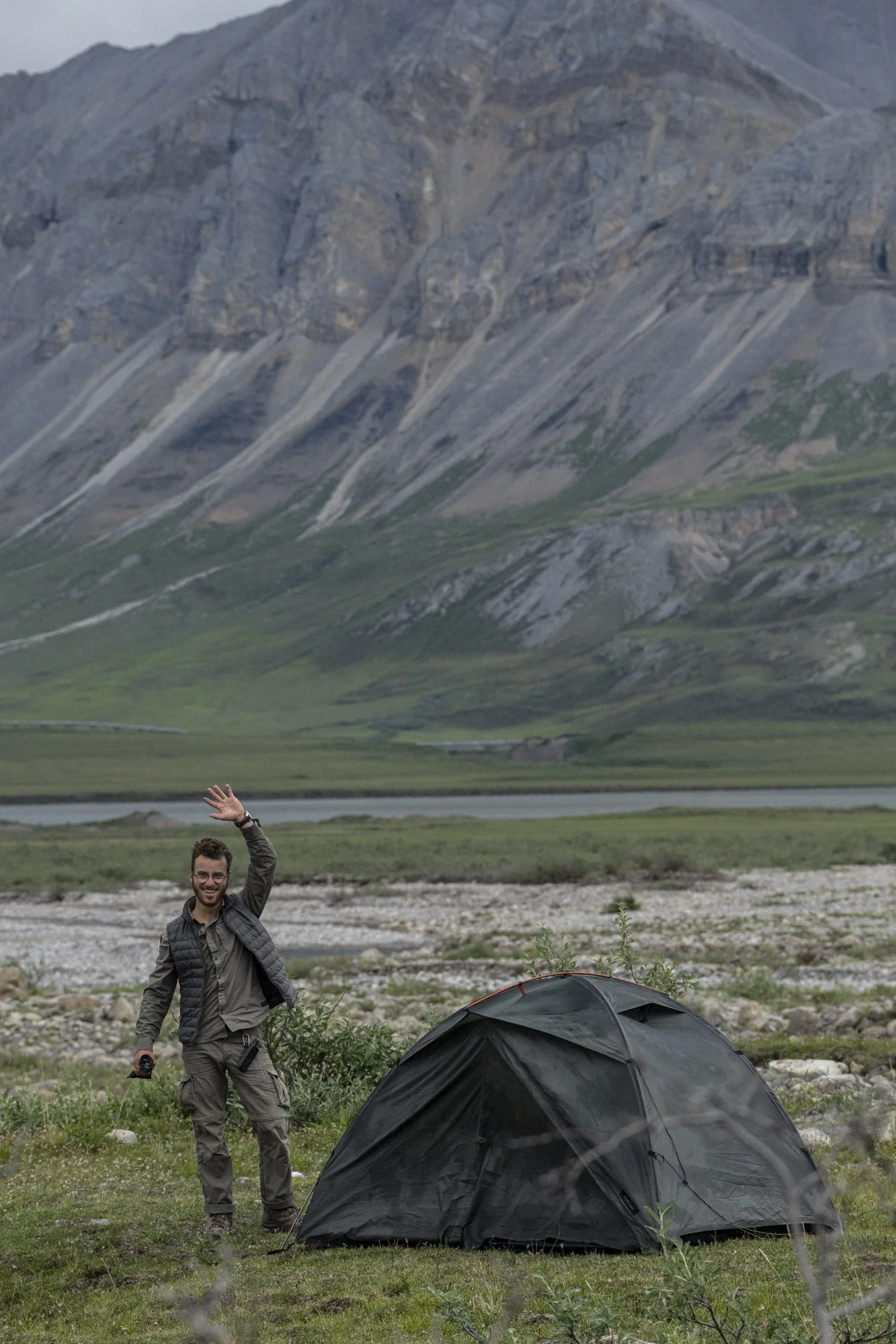
What the Dalton Highway tends to clarify, through its distance and its cost and its mosquitoes and its bears and its blocked roads in the middle of nowhere, is what actually matters in an encounter between two people. It is not biography. It is not reputation. It is proximity, necessity, and the small acts of care that become possible when everything else has been stripped away.
A pan of potatoes. A shared camp. Two people going north.
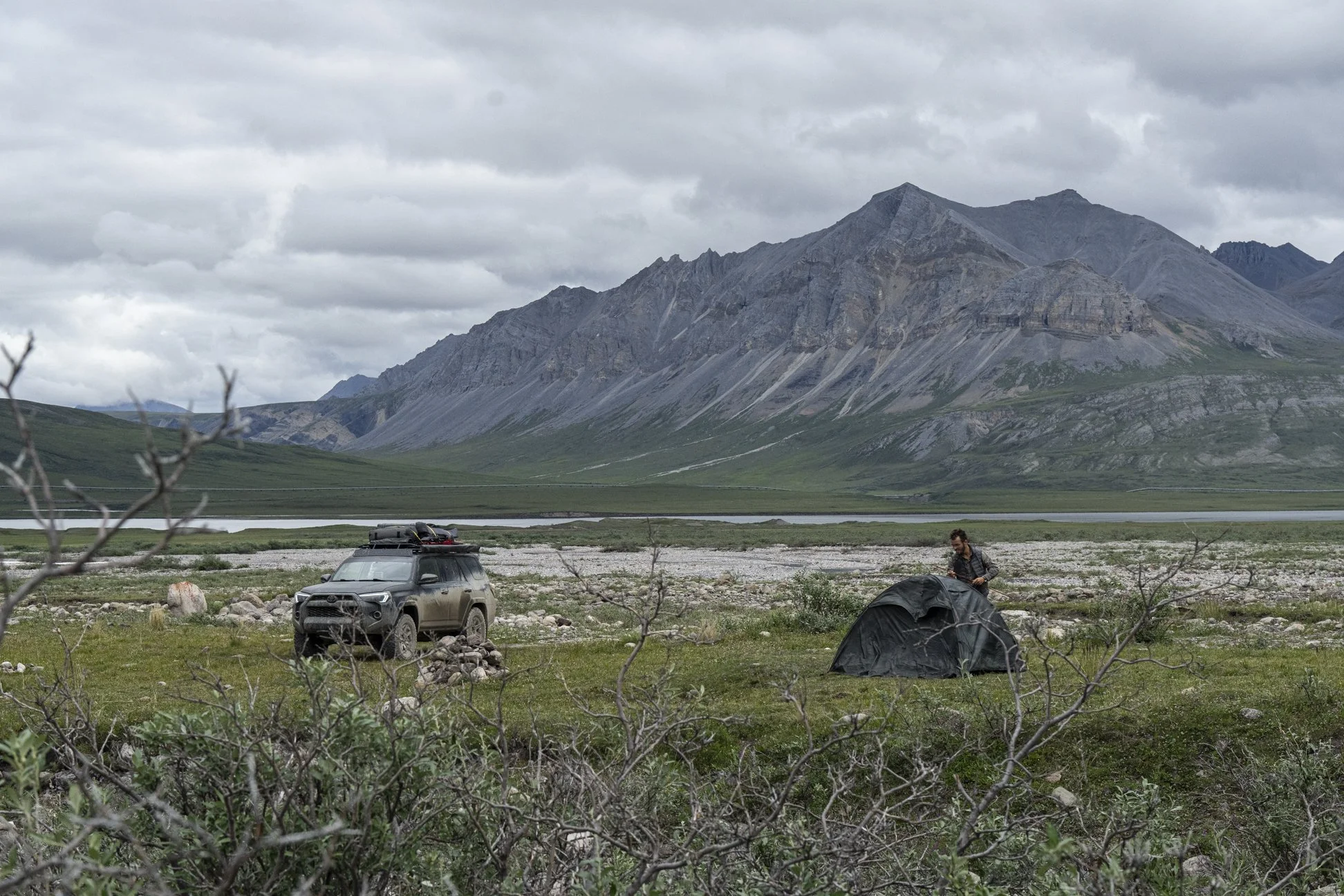
If you’d like to trace the arc of Hugo’s Yukon-to-Alaska journey, this Polarsteps page captures the trip: https://www.polarsteps.com/HugoLepineTraveler/18692453-expedition-yukon-alaska