

The Theft That Changed My First Days in Oaxaca
I filmed someone stealing the solar panels off my 4Runner in April. Months later, the video went viral. The reactions were unexpected, but the story I remember most began after I told a friend what had happened.
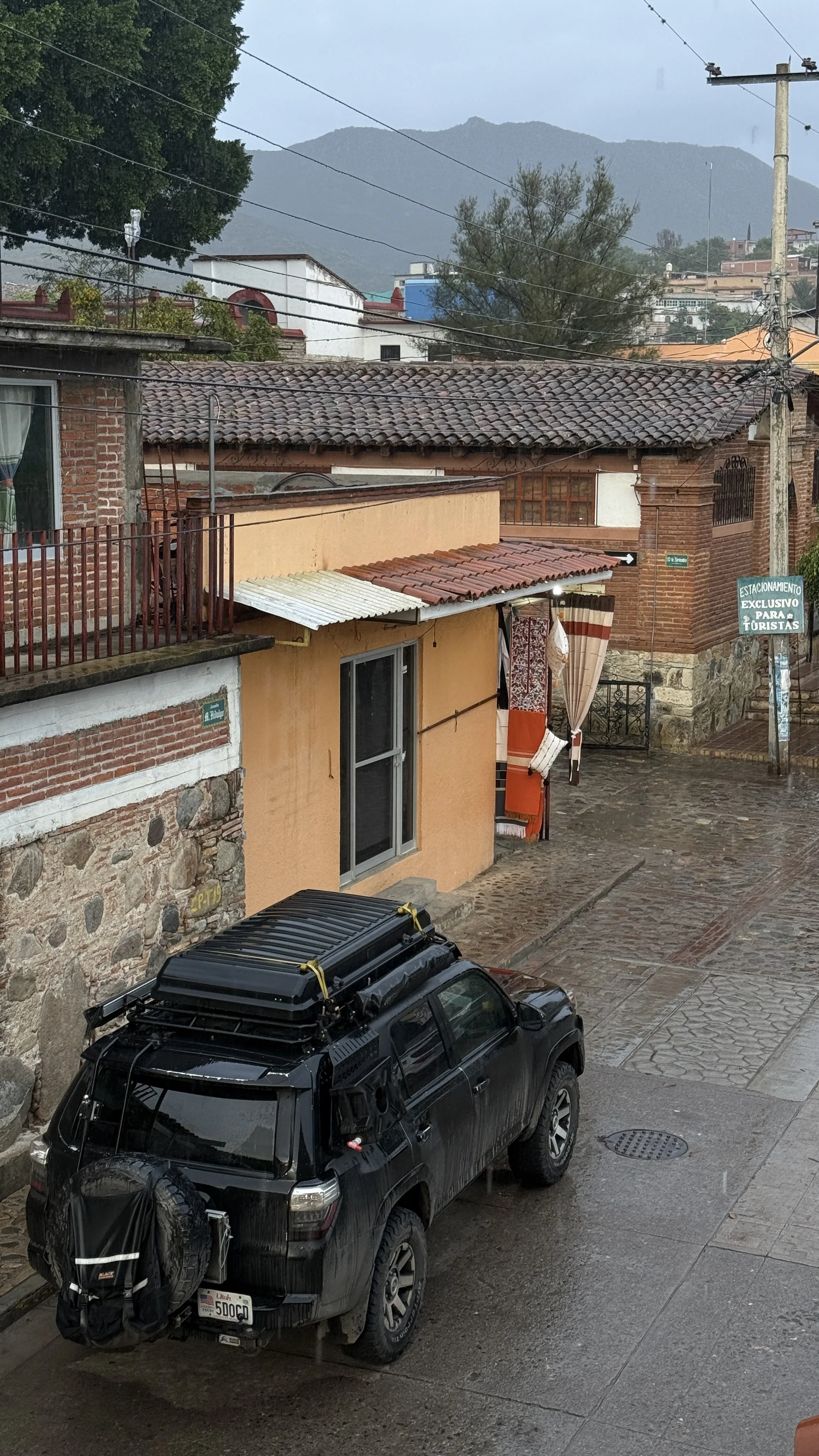
Streets of Oaxaca
An Unwelcome Introduction
I had been in Oaxaca, Mexico, for only a few days when someone stole the solar panels off my Toyota 4Runner.
I was traveling from Alaska toward Argentina, living out of my vehicle and relying on my equipment to sustain the journey. My solar setup was part of how I managed life on the road, so losing it was more than an inconvenience. It was another unexpected expense and another problem to solve while far from home.
I managed to capture the incident on video.
For months, I debated whether to share the footage publicly. There is a difference between recording something that happens to you and deciding to put it in front of an audience. I knew the video could attract attention, but I wasn't sure I wanted to invite the scrutiny that might come with it.
Eventually, I posted it.
The response was much larger than I expected. The video began circulating online, and a news station contacted me to ask permission to share it. Another station subsequently published it, bringing the incident to an audience well beyond my own social media following.
Something that had happened months earlier suddenly became news.
But the reaction to the video introduced a second story, one that had less to do with the theft itself and more to do with how people perceived the person behind the camera.
Video captures solar panels being stolen from a Toyota 4Runner in Oaxaca, Mexico. The story behind the viral footage and an unexpected friendship.
When the Comments Became the Story
Among the comments were people blaming me for what happened and criticizing my presence in Oaxaca. Some framed their reactions around foreigners, gentrification, and the effects outsiders can have on local communities.
Those are legitimate subjects for discussion. Tourism, rising costs, property speculation, and the arrival of foreign residents can create real pressures for local people. Being a visitor doesn't place someone outside those conversations, and I don't believe the answer is to dismiss every concern simply because it comes from criticism.
But there is a difference between examining someone's impact on a community and deciding who they are based on a short video.
I had driven thousands of miles across the Americas, funding my journey with my military disability. I was in Oaxaca to volunteer my creative skills, and I would eventually spend more than three months working with Fundación En Vía, documenting local businesses, traditional crafts, and the knowledge of people in the Tlacolula Valley.
I wasn't there to claim ownership of someone else's culture or to tell people how they should live. I wanted to use the skills I had developed in filmmaking and photography to help people share their own work and stories.
That doesn't mean my intentions automatically settle every question about what it means to be a foreigner in another country. Intentions and impact aren't always the same thing. But I do think people deserve to be understood through more than assumptions.
Some commenters went further, attacking my military service and accusing me of being an Israeli baby killer. The discussion had moved far beyond the footage of someone taking my equipment.
I had shared a video of a theft. Somehow, the conversation had become a referendum on my identity, my past, and whether I belonged in the place where it happened.
It was a reminder of how quickly a person can become a symbol in an online argument, even when the people making judgments know almost nothing about their actual circumstances.
The video showed a few moments. It couldn't show the months of work, the people I would meet, or the reasons I had come to Oaxaca in the first place.
The comments I’m referring to can be found under these links where the video was published on two different news stations.
https://www.instagram.com/reel/DeSy2sNRuMe/?srtk=NmNnbmQyM2hzdHp2
https://www.facebook.com/share/r/1cghCzQWeg/?mibextid=wwXIfr
An Unexpected Act of Kindness
There was another side to this story, and it didn't happen online.
One of the people I had met in Oaxaca lived just a few blocks from where I was about to begin volunteering. After I told her about the theft, she offered to let me park my 4Runner on the street outside her home, a private cul-de-sac.
It was a simple gesture, but when you're living out of your vehicle, a place to park can mean a great deal. Your vehicle isn't just transportation. It's your home, your equipment storage, and the foundation that makes the next day possible.
Her offer gave me somewhere nearby to leave the 4Runner and brought a little more security to an uncertain situation.
It also brought us closer.
I hadn't expected a theft to become part of the story of a friendship. She didn't have to offer me anything, but she did. What began as a conversation about an unfortunate incident became a connection that grew through the time we spent in Oaxaca.
While strangers online were drawing conclusions about me, someone who actually knew me responded to my circumstances with a practical act of kindness.
I don't think that makes one person right and everyone else wrong. It simply illustrates the difference between forming an opinion from a distance and getting to know another human being.
The internet had turned the theft into a public spectacle. In real life, the aftermath helped bring two people closer.
Before Fundación En Vía
At the time of the theft, I barely started volunteering with Fundación En Vía.
I couldn't have known that Oaxaca would become one of the most significant chapters of my journey. Over the following months, I would document Zapotec women, local businesses, traditional weaving and natural dyes, pottery, and the process of making chocolate. I would spend time learning about the people behind the work, rather than simply passing through with a camera.
That experience would help shape how I thought about Every Picture a Poem and the role visual storytelling could play in supporting communities.
But none of that had begun yet.
I was still settling in, figuring out where to park, how to manage the practical demands of life on the road, and how to navigate a place that was new to me.
The theft was an unpleasant introduction to Oaxaca. The friendship that grew closer afterward became part of what made the place meaningful.
Looking back, I wouldn't romanticize what happened. Someone took equipment that wasn't theirs, and I had to deal with the consequences. The experience didn't need to happen for something good to come afterward.
Still, the two events became intertwined in my memory: the loss of something practical and the unexpected generosity of someone willing to help.
Beyond the Viral Video
It's easy to measure a journey through miles traveled, borders crossed, and places visited. Those things are tangible. They can be counted, photographed, and shared.
Relationships are harder to measure.
The theft attracted attention because the footage gave people something immediate to react to. The video had a clear subject, and the comments offered a place for people to express their opinions. But the experience itself was larger than the clip.
There was the decision to publish it months after the incident. There was the unexpected attention from news outlets. There were the assumptions made by people who didn't know me. And there was a friend who, after hearing what had happened, offered me a place to park.
Oaxaca would become much more than another stop on my journey from Alaska to Argentina. It would become a place where I spent months learning, creating, and building relationships through my work with Fundación En Vía.
The video may be what brings people to this story. It isn't what defines my time in Oaxaca.
Sometimes, an experience is remembered for the thing that went wrong. Sometimes, what matters most is what happens around it: the people who step forward, the connections that deepen, and the opportunities that come afterward.
Before the volunteering, before the projects, and before the footage reached a wider audience, there was a difficult first week in Oaxaca—and a friend who helped make an unfamiliar place feel a little less unfamiliar.
That is the part of the story I want to remember.